
As geopolitical tensions escalate in the Middle East, particularly with renewed hostilities between Israel and Iran, Pakistan’s Finance Minister Muhammad Aurangzeb has reassured that the country is well-prepared to handle any economic fallout that may arise from regional instability.
Speaking at the National Workshop on Transitioning to Defined Contribution Pension Schemes, hosted by the Securities and Exchange Commission of Pakistan (SECP) at the Marriott Hotel in Islamabad, Aurangzeb emphasized that the government is taking a proactive approach to safeguard the economy.
“We had a detailed session with all stakeholders on Monday to assess our asset pricing and ensure adequate stock levels. We’re confident in our preparedness for any scenario—though we sincerely hope escalation does not occur,” he stated.
In response to fears of potential disruption in global oil supplies due to escalating Middle East tensions, Prime Minister Shehbaz Sharif formed a high-level committee earlier this week to monitor domestic fuel prices and ensure stable supply lines source: Geo News.
Positive Signals from US-Pakistan Trade Talks
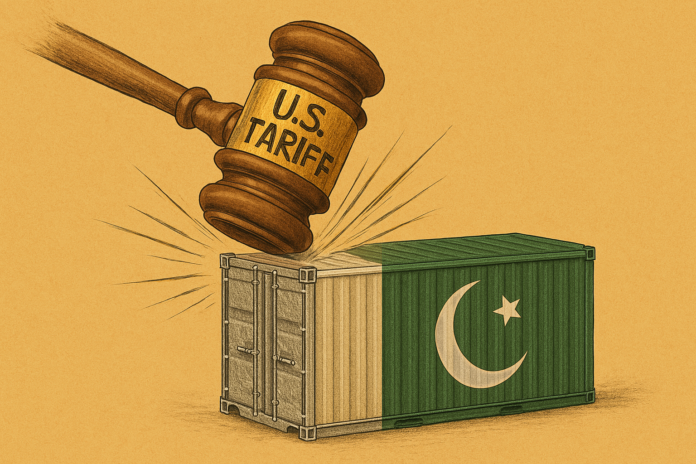
On a more hopeful front, Finance Minister Aurangzeb shared optimistic developments regarding Pakistan’s ongoing discussions with the United States on trade tariffs. He recently held a “very constructive and positive” meeting with U.S. Commerce Secretary Howard Lutnick.
“Both nations are progressing in the right direction. We aim to ensure that Pakistan maintains competitive access to US markets while strengthening our strategic bilateral relationship,” said Aurangzeb.
These discussions are part of Islamabad’s broader effort to mitigate the impact of the 29% reciprocal tariffs that were imposed by former US President Donald Trump in 2018—a move that severely affected Pakistan’s export potential source: Dawn News.
Structural Reforms and Fiscal Sustainability
Highlighting the government’s ongoing commitment to structural reforms, Aurangzeb reaffirmed efforts to reform state-owned enterprises (SOEs), energy pricing, and the tax system. A major focus, he said, is transitioning from protectionist trade policies to a more competitive export-driven economy.
“We’ve taken decisive steps to lower tariffs and reduce debt servicing costs. This reform path is non-negotiable if we want sustainable growth,” he noted.
He also flagged a critical fiscal concern—pension payments have now exceeded PKR 1 trillion, surpassing even the federal development budget. This revelation reinforces the urgency of shifting to defined contribution schemes to ensure long-term fiscal health source: Business Recorder.